
Hernia Surgery
Hernia Surgeon in Pimpri Chinchwad (PCMC)
At the clinic of Dr. Deepa Kulkarni, patients receive advanced hernia diagnosis and treatment with a focus on safety, faster recovery, and long-term relief. With extensive experience in laparoscopic and open hernia surgeries, Dr. Kulkarni provides personalized treatment plans based on each patient’s condition and lifestyle requirements.
- 15+ Years Experience
- Same-Day Appointments
- 4.9★ Google Rating
- Transparent Pricing
🗓️ Book Your Appointment
🔒 Your data is private. No spam, ever.
2,500+
Happy Patients in Pune
15+
Years of Experience
4.9 ★
Google Review Rating
98%
Would Recommend Us
What is a Hernia?
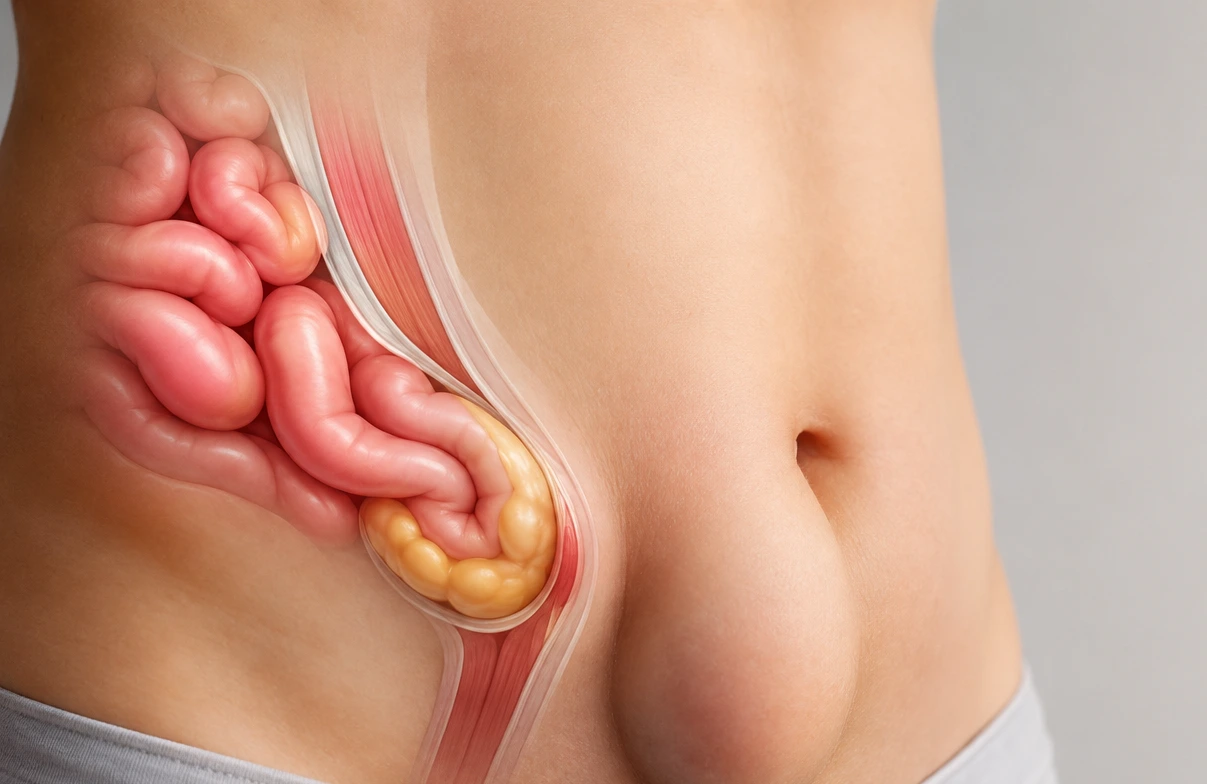
Hernia is a common condition that occurs when an internal organ or tissue pushes through a weakened area of the muscle or abdominal wall. While a hernia may initially cause mild discomfort, delaying treatment can lead to complications such as severe pain, bowel obstruction, or strangulation. Early diagnosis and timely surgical intervention are essential for preventing further health risks.Hernias can occur in different areas of the body and often worsen over time if left untreated.
Most hernias do not heal on their own and typically require surgical repair to prevent complications and improve quality of life.
Types & Causes
Types of Hernias We Treat
Our expert evaluation helps identify the exact type of hernia and ensures the most effective treatment approach for long-term relief and recovery.
Inguinal hernia
The most common type of hernia, occurring in the groin area. It is more frequently seen in men.
Femoral Hernia
Develops near the upper thigh and groin region and is more common among women.
Umbilical Hernia
Appears around the belly button and may affect infants, adults, and pregnant women.
Incisional Hernia
Occurs at the site of a previous abdominal surgery where the tissue becomes weak.
Hiatal Hernia
Develops when part of the stomach moves upward through the diaphragm into the chest cavity.
Epigastric Hernia
Forms in the upper abdominal region between the breastbone and navel.
When to see a doctor
Common symptoms
- Visible bulge, especially when standing or straining
- Feeling of heaviness or pressure in the abdomen
- Nausea or difficulty in bowel movements (if complicated)
- Pain when lifting, bending, or coughing
- Burning or aching at the hernia site
- Growing lump that doesn't reduce when lying down
Evaluation
How hernia is diagnosed
Hernias do not heal on their own and usually require surgery. Dr. Deepa Kulkarni offers two primary surgical approaches:
Open Surgery
- A single large incision is made at the hernia site.
- The protruding tissue is pushed back, and the muscle wall is repaired.
- A synthetic mesh may be used to reinforce the area.
- Recovery time: 4-6 weeks.
Laparoscopic (Minimally Invasive) Surgery
- Small incisions are made to insert a tiny camera and surgical tools.
- Less post-operative pain and faster recovery.
- Reduced risk of infection and scarring.
- Recovery time: 2-3 weeks.
Recovery and Post-Surgery Care
1
Hospital Stay
Laparoscopic patients need 2 days stay; open surgery patients will also need 2 days stay.
Pain Management
Mild discomfort can be controlled with prescribed painkillers.
Activity Restrictions
Avoid heavy lifting and strenuous activities for at least 4-6 weeks.
Dietary Advice
Eat fiber-rich foods to prevent constipation and ensure smooth recovery.
Follow-Up Appointments
Regular check-ups with Dr. Deepa Kulkarni ensure proper healing and prevent recurrence.